Background
The client sells hair extensions and accessories online. Before coming to re:Bloom, the client had an existing Shopify site that she had built herself. She was familiar with the basics of the Shopify platform but was not familiar with any extensions or the Shopify 2.0 features.
The Problem Space
Developer inexperience with Shopify. Applying Figma designs to Shopify themes. Figuring out ways to make site as user friendly as possible. Understanding how to better set up website in order to appeal to customer base.
Our Solution
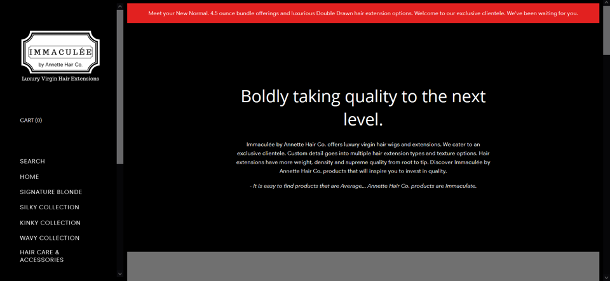
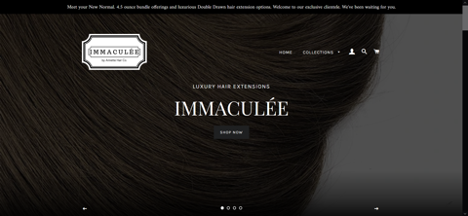
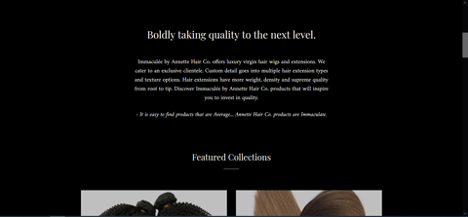
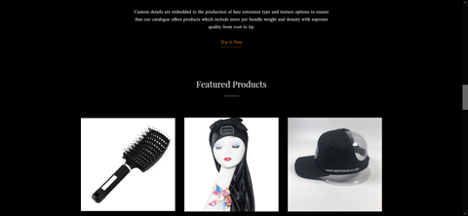
Our solution was to remake the existing site from the ground up using the Shopify platform to take into account the design elements we identified by analyzing competitors. Each page was redesigned to fit the aesthetic of the company with standardized colors, fonts, and styling. Additionally, we refined the shopping flow by adding featured products on product pages and the homepage to encourage shoppers to check out related items that they may wish to purchase. Lastly, we developed training materials to help with key features of Shopify that our client wished to learn how to use, including automating email pop-ups with MailChimp.
Design Process
Adrienne came to re:Bloom to revamp the design of her website, so we lengthened our design process to between two and three weeks in order to have time to capture the aesthetic our client was going for. It was also very important that our new design improved the user shopping flow to better drive sales as this was a key issue with the client’s previous site. Our client’s brand focus was on luxury hair extensions. Adrienne specified that she wanted to encapsulate a luxury feel and aesthetic. We began by analyzing other hair companies and luxury brands. We used high contrast colors, a mix of serif and sans serif fonts, and large high quality images.We iterated on these designs in Figma by making low and then high fidelity wireframes. We communicated all of our designs in our weekly client meetings by showing the updates to the design. We continued to adjust our designs according to our client’s feedback until we had achieved the aesthetic we were satisfied with.
Development Process
For our solution, we chose the Shopify platform as the client was already familiar with the basics of the platform, so her maintenance of the site after offboarding would be easier. After our extended 2-3 week design period, we began development of the site. Towards the middle of the project, we faced challenges with staying on schedule as Shopify is one of the more time-intensive web development platforms, but switching to a more development friendly base theme and prioritizing building out the structure of the site for two weeks put the project back on track. We faced an obstacle in deciding the best Shopify theme to begin working on to minimize the amount of custom code needed. We found a theme that fit our specifications (horizontal navigation bar, large graphic elements, and a dramatic luxury aesthetic) almost perfectly after some experimentation and only struggled with customizing the way that the navigation bar was displayed.
![]()
Feedback Process
During our weekly client meetings, we held a feedback session where we showed all of our relevant work for the week to our client and solicited feedback by asking pointed questions about anything we were unsure about. We discussed the feedback as a team following these sessions to identify changes that needed to be made. For user testing, Adrienne gave us a list of people that had signed up on the original site so that we had users from the exact target demographic. We emailed the users and ended up having 3 users respond. We wrote a standardized script with an emphasis on giving them time to explore the site. We then asked them questions about the design of the site, how easy they feel it is to navigate, and specific wordings and design elements that we were unsure about. From our user testing, we found that the site matched the luxurious aesthetic we had sought out to capture. Some feedback on how collections are organized caused us to take a closer look at how best to organize the products (by texture, color, product type, etc.).
![]()
Training Process
Our client already understood all of the basics of the Shopify platform as she had developed her previous site on her own. Thus, our training was based on what she indicated that she would like to learn. We created three training videos outlining how to implement embedded videos in Shopify sites, how to utilize MailChimp for email popups on the site, and how to take advantage of some of the Shopify 2.0 features. We planned the specific training topics by asking her what she wanted to learn at the beginning, middle, and end of the cohort. Also important to the sustainability of the site was ensuring that it was easy for her to maintain with her tech fluency. Thus, the new web store does not contain a significant amount of custom code. Additionally, design documentation with standardized fonts, colors, and design language was provided to help our client keep the design of her site standardized as she maintains it.